
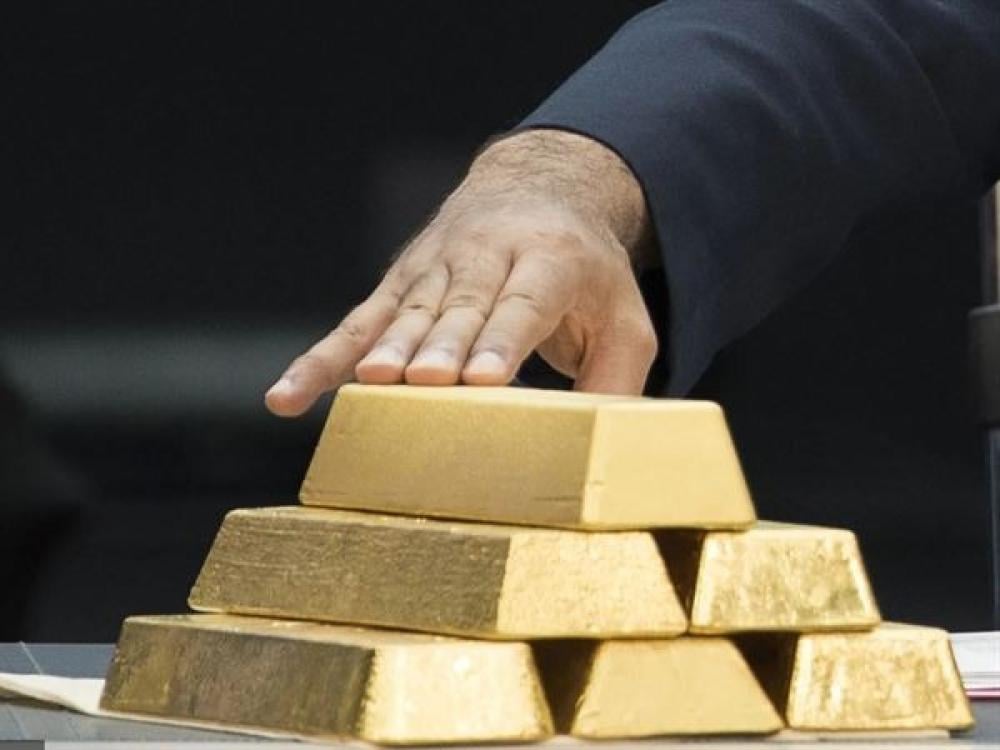
Gold maintained its positive performance at the start of Tuesday's European session, trading near $4,765 an ounce and gaining approximately 0.50% on the day. Despite the breakdown of peace talks between the United States and Iran over the weekend, markets remain optimistic about the continuation of the diplomatic process and the possibility of resuming negotiations in the near future.
In this context, the US dollar is facing pressure due to the uncertainty surrounding the direction of monetary policy at the US Federal Reserve, which supports gold and pushes it to continue recovering from its recent levels below $4,650.
Statements by US Vice President J.D. Vance, characterized by cautious optimism regarding the negotiations with Iran, also contributed to increased risk appetite. In an interview with Fox News, he indicated that tangible progress had been made, with the possibility of reaching a comprehensive agreement if Iran demonstrated greater flexibility in the next phase.
This optimism is reflected positively in market sentiment and reduces the strength of the dollar as a safe haven currency, thus enhancing the attractiveness of commodities denominated in it, most notably gold.
Conversely, inflationary concerns remain a major pressure factor, driven by rising energy prices resulting from escalating geopolitical tensions in the Middle East. Recent data showed that US inflation rose at its fastest pace in nearly four years during March, fueled by higher energy prices, reinforcing expectations that monetary policy will remain tight for an extended period.
However, CME Group’s FedWatch tool indicates a 30% probability of a 25-basis-point interest rate cut in December, which limits the dollar’s gains and supports gold as a non-yielding asset.
Due to these factors, gold prices rose to about $4,777 an ounce in recent hours, but this rise still lacks strong momentum, given the continued tensions in the Strait of Hormuz.
Geopolitical risks remain a key factor in the markets, helping to limit the sharp decline of the dollar, while at the same time restricting gold's ability to achieve strong and sustainable gains.